

Quick Answer
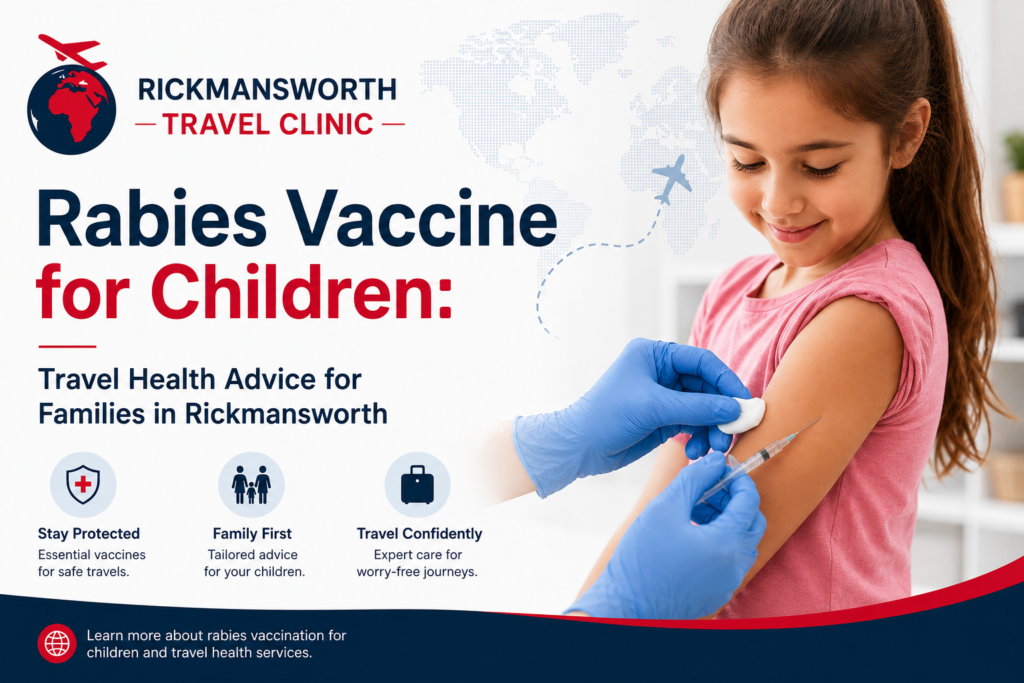
Children may need the rabies vaccine before travel if they are visiting countries where rabies is present, especially for rural trips, long stays, outdoor activities or destinations with limited access to urgent medical care. Children are at higher risk because they may touch animals and may not report small scratches.
Introduction
Family holidays can be exciting, but children often interact with animals differently from adults. A child may stroke a dog, feed a monkey, pick up a kitten or forget to mention a small scratch.
Rabies is rare in UK travellers, but it is a serious infection once symptoms begin. For families in Rickmansworth travelling to Asia, Africa, Central or South America, or other rabies-risk areas, pre-travel vaccine advice is important.
Rickmansworth Travel Clinic offers rabies vaccination and personalised travel-health guidance for families.
Key Takeaways
- Children may be more likely to touch animals abroad.
- Small scratches or licks on broken skin can need urgent advice.
- Rabies vaccination may be recommended for higher-risk family trips.
- Rural travel, long stays and limited healthcare access increase risk.
- Vaccinated children still need medical care after possible exposure.
- Parents should supervise children closely around animals abroad.
- Book early because rabies vaccination may need multiple doses.
Why Are Children at Higher Risk of Rabies Exposure?
Children are at higher risk because they may approach animals without understanding the danger.
They may try to pet dogs, cats, monkeys or other mammals, especially in tourist areas, temples, markets, beaches or villages. Young children may also fail to tell parents about a bite, scratch or lick.
For this reason, rabies advice is especially important for families travelling with babies, toddlers or school-age children.
When Should Children Consider the Rabies Vaccine?
Children may need rabies vaccine advice if the trip involves higher exposure risk.
Vaccination may be considered if your child is:
- Travelling to a rabies-risk country
- Staying for several weeks or longer
- Visiting rural or remote areas
- Travelling to places with limited medical care
- Joining outdoor activities, trekking or camping
- Staying with family abroad where animals are nearby
- Visiting areas with stray dogs, monkeys or bats
- Too young to reliably report small injuries
Not every child needs the rabies vaccine. The decision depends on destination, activities, trip length and access to urgent treatment.
Rabies Vaccine for Children vs Adults
Children and adults may both need rabies protection, but the risk assessment is different.
Traveller | Main Concern | Why Advice Matters |
Young children | May touch animals or hide scratches | Parents may not notice exposure quickly |
Older children | May play near stray animals | They may underestimate risk |
Adults | Usually better at avoiding animals | Still need advice for high-risk travel |
Families | Group exposure risk varies | Each traveller should be assessed |
A family appointment can help check whether each child and adult needs vaccination.
What Should Parents Do After a Bite or Scratch Abroad?
Parents should wash the wound immediately and seek urgent medical care locally.
Use soap and running water to clean the area thoroughly. Do not wait until returning to the UK. Keep records of any treatment given abroad, including vaccine dates and clinic documents.
Even if your child had rabies vaccination before travel, medical advice is still needed after a possible exposure.
You can read more in the clinic’s guide on being scratched or bitten by a dog or monkey abroad.
How Can Families Reduce Rabies Risk?
The best protection is to prevent animal contact.
Parents should teach children not to touch, feed or tease animals abroad. Avoid animal selfies, monkey feeding, stray dogs, street cats and injured bats. Check children for scratches after animal contact, especially if they are too young to explain what happened.
Useful rules for children:
- Do not touch animals abroad.
- Tell an adult immediately after any bite or scratch.
- Keep snacks away from monkeys.
- Do not run from dogs.
- Never touch bats.
Common Misconceptions About Rabies and Children
One common misconception is that only dog bites matter. Cats, monkeys, bats and other mammals may also carry rabies in some countries.
Another myth is that a tiny scratch is harmless. If saliva enters broken skin, urgent assessment may be needed.
Some parents also think vaccination means no further treatment is required. This is incorrect. Rabies vaccination helps prepare the immune system, but post-exposure care is still needed after possible contact.
How Can Rickmansworth Travel Clinic Help?
Rickmansworth Travel Clinic can review your family’s destination, dates, accommodation, activities and previous vaccine history.
The clinic offers rabies vaccination and wider travel vaccination services. Depending on your destination, the team may also discuss Hepatitis A, Typhoid or Japanese Encephalitis.
The clinic is located at:
3 Tudor Way, Berry Lane
Rickmansworth
WD3 4DF
To prepare your family for travel, visit the Rabies Vaccine page or book your appointment.
People Also Ask
Do children need the rabies vaccine before travel?
Some children may need it if travelling to rabies-risk areas, especially for rural trips, long stays or limited healthcare access.
Is rabies vaccine safe for children?
Most children can receive the rabies vaccine when it is recommended after travel-health assessment.
Are children more likely to get bitten abroad?
Children may be more likely to approach animals and may not report small bites or scratches.
Do vaccinated children still need treatment after a bite?
Yes. Medical advice is still needed after any possible rabies exposure.
Where can families get rabies vaccine in Rickmansworth?
Rickmansworth Travel Clinic provides rabies vaccination and family travel-health advice.
Conclusion
Children may need special rabies vaccine advice before travel because they are more likely to touch animals and may not report small injuries. Family risk depends on destination, trip length, activities and access to urgent medical care.
Rickmansworth Travel Clinic can assess your family’s plans and advise whether rabies vaccination is recommended before you travel.
Medical notice: This article provides general travel-health information and does not replace personalised clinical advice.
FAQs
Rabies vaccine may be suitable for babies and children when recommended by a clinician.
No. It depends on destination, travel style, duration and animal exposure risk.
Yes. Monkeys can bite or scratch, especially where food is present.
Yes, if saliva touches broken skin, eyes, mouth or nose.
Wash it immediately and seek medical advice locally.
No. Rabies treatment should be assessed urgently while abroad.
Book several weeks before travel where possible because the course may need planning.
Coverage varies, so check your travel insurance before departure.